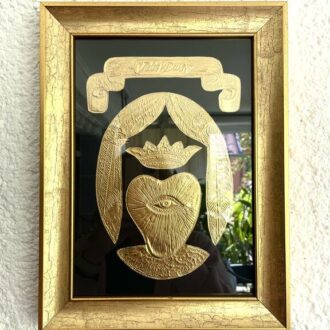
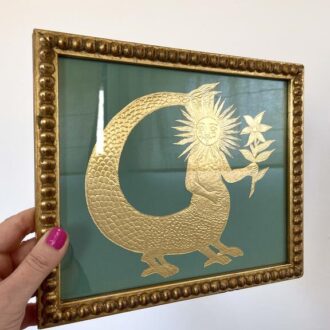
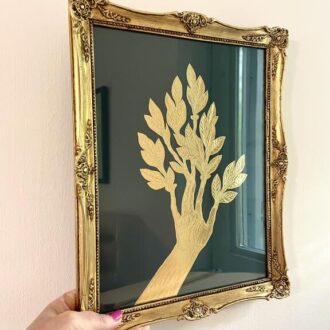
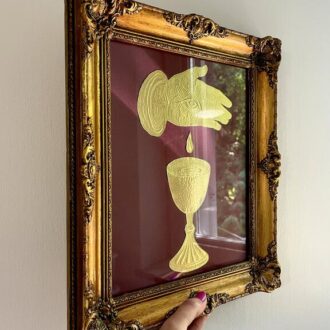
Size | 33 x 41 cm with frame
Material | metal, paper, wood, glass
Technique | hand-drawn embossed metal sheet in frame
Delivery time | I make it individually after the order, it will be made within 4 weeks, and then it will be shipped after that
When ordering, please specify in the comments what color background you would like.
I will contact you after the order.
INSPIRATION | Wonders of Creation and Marvels of Existing Things
Author: Zakarīyā ibn Muḥammad al-Qazwīnī (1203-1283)
A significant medieval encyclopedic work, Persian manuscript.
An influential, often illustrated text describing the celestial spheres, geography, fauna, flora, and creatures in two main parts. The first part describes the heavens (stars, planets, angels), and the second part discusses the earthly world (geography, plants, animals, and humanity).
Significance: This is one of the most famous Islamic cosmographies, frequently copied and read for centuries. It combines scientific, philosophical, and fantastic observations, documenting both natural history and mythical, imaginary beings.
In Islamic belief, jinn and angels are different beings: angels are created from light, sinless, and obedient to God, while jinn are created from smokeless fire, free-willed beings (even humans), who can be good or evil.
Angels do not have free will, they obey God unconditionally. Jinn have free will, can choose between good and evil, and are responsible for their actions.
Angels are purely spiritual, while jinn can also take on physical form.
Angels are immortal (in this earthly sense), while jinn are born, live, and die.
Angels live in heavenly spheres, jinn on earth, often in deserted places.
Overall, angels are messengers and enforcers, while jinn live in parallel with humans, with their own community and destiny.

Reviews
There are no reviews yet.